Loading…
Serving San Clemente, CA and surrounding areas. (949) 739-0478
Starting a new structure on a San Clemente lot? A properly poured slab foundation with the right steel, base prep, and vapor barrier is the one part of the job you cannot go back and fix later.
Slab foundation building in San Clemente means excavating and grading the site, compacting a gravel base, installing a vapor barrier and reinforcing steel, and pouring a structural concrete slab - most residential jobs take three to seven days of active construction, plus two to four weeks upfront for city permits and plan review.
San Clemente is the most common foundation type built here. Slabs are cost-effective and perform well in the region's climate, but getting one right requires understanding the local soil conditions, the seismic zone requirements, and the City of San Clemente's permit process. Every detail that goes in before the pour stays buried under your structure for the life of the building.
Slab foundation work often connects naturally to other concrete projects. If your new slab is for a garage, our foundation installation service covers the full structural system. And when deeper anchoring is needed below the slab perimeter, our concrete footings service handles that as part of the same build.
If you are adding a home, an accessory dwelling unit, a detached garage, or a large addition, a new slab foundation is required before framing can begin. In San Clemente, ADU projects are one of the most common reasons homeowners call for a new slab - and the foundation is the one component the city inspects closely before any walls go up.
Hairline cracks in concrete are normal. But cracks wider than about a quarter of an inch - or cracks running diagonally from corners of doorways - suggest the slab is moving or settling unevenly. San Clemente's expansive clay soils can drive this kind of movement after a wet winter followed by a dry summer.
When a slab shifts or settles unevenly, the walls and frames above it shift too. If doors that used to swing freely now stick, or gaps have appeared at the tops of door frames, the foundation may be the cause. This is worth having assessed before the movement compounds into a larger structural repair.
If your floor feels damp, tiles are lifting, or you smell mustiness near floor level, moisture may be migrating up through the slab from the ground below. In San Clemente's coastal environment, a slab without a properly installed vapor barrier - or an older slab where that barrier has degraded - can allow this. A new slab installation includes moisture protection that older slabs often lack.
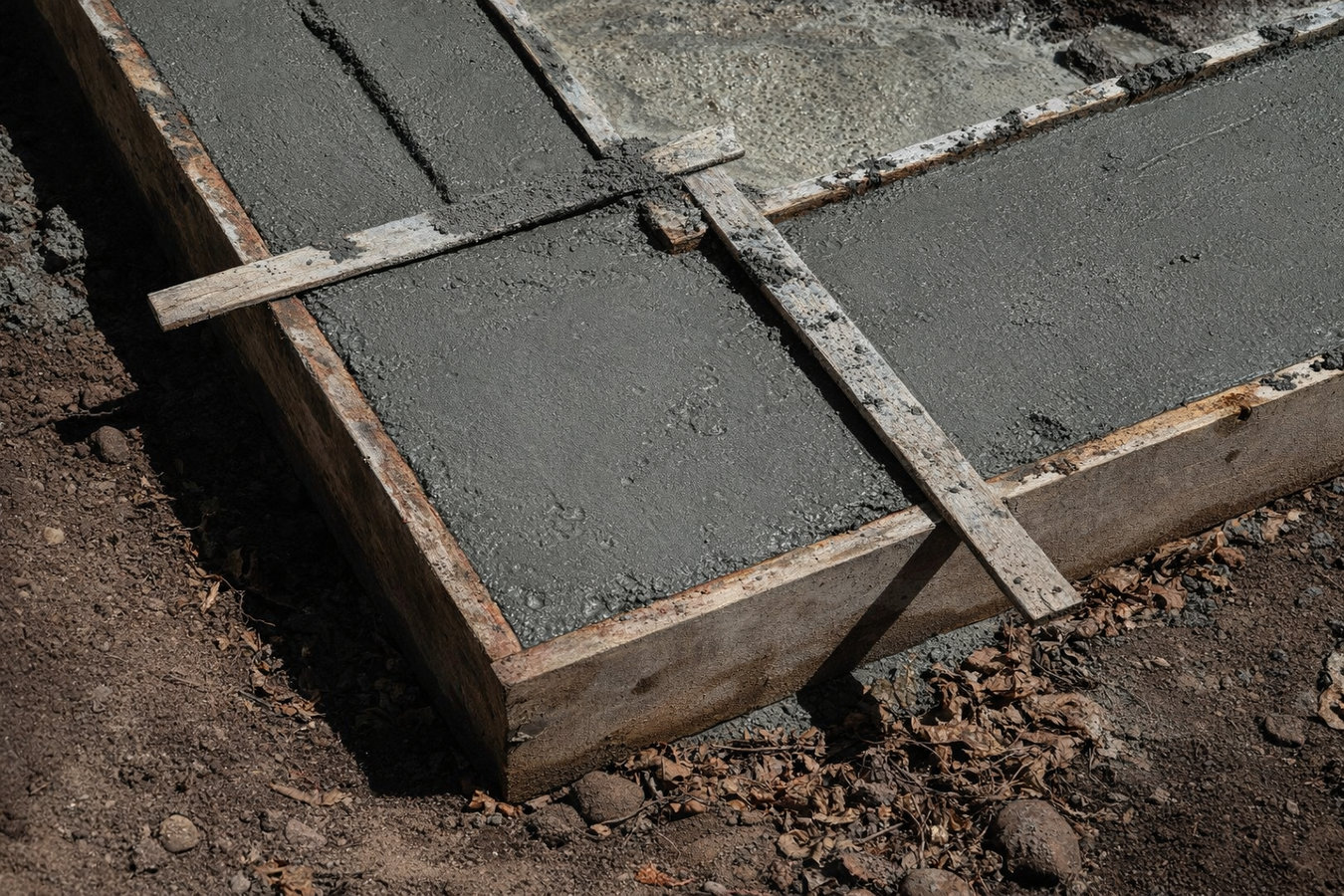
Every slab we pour starts with what goes underneath - excavating and grading to the correct depth, compacting the soil, laying a gravel base, and installing both a polyethylene vapor barrier and a steel reinforcing bar grid. These are not optional extras. They are what separates a slab that lasts 50 years from one that starts cracking within a few. Thickness is calibrated to the load: a standard residential slab runs four to six inches, with thickened edges and perimeter beams under load-bearing walls and garage slabs. For projects that require deeper structural anchoring, we coordinate our concrete footings work as part of the same build.
We manage the City of San Clemente permit application, schedule the required pre-pour inspection, and keep you updated throughout the review process so you are not guessing where your project stands. When the slab supports a larger structure, we work alongside the project team to sequence our work correctly. If your project involves a full foundation system rather than a standalone slab, our foundation installation service covers the complete scope from excavation through final city inspection.
Best for homeowners adding a primary home, ADU, or addition that requires a new structural concrete base before framing can begin.
Suits homeowners building a detached garage, workshop, or storage structure that needs a thickened, reinforced slab designed for vehicle and equipment loads.
Designed for homeowners adding an accessory dwelling unit - sized and engineered to meet San Clemente's specific ADU permit requirements.
For homeowners replacing a cracked, settling, or improperly poured existing slab that no longer provides the flat, structurally sound base the building needs.
San Clemente sits on marine terrace soils and hillside terrain that can include pockets of expansive clay - a type of soil that swells when wet and shrinks when dry. That seasonal cycle puts stress on a slab that was not designed to handle it. A soil report is often required by the city before a foundation permit is issued here, and the report determines how the slab is designed, not the other way around. The city also sits in one of California's higher seismic activity zones, meaning the reinforcing steel inside the slab must be laid out to handle ground shaking, not just static loads. Local building inspectors enforce these requirements closely, and they should - the inspection before the pour is the last chance to confirm everything is correct before it is buried permanently. According to the California Geological Survey, coastal Southern California is among the most seismically active regions in the state.
Hillside lots add a separate layer of complexity. A significant share of San Clemente homes sit on sloped terrain - particularly in neighborhoods like Marblehead and the older hillside tracts near downtown - where flat lots are the exception. Sloped lots require more excavation, more grading, and sometimes a stepped slab design that follows the terrain to reach stable soil. We serve homeowners throughout San Clemente and nearby Mission Viejo, where hillside conditions and permit requirements shape every foundation project.
We reply within one business day and schedule a no-charge visit to your property. Ground conditions, lot slope, slab size, and equipment access all affect the price significantly in San Clemente - we assess all of it before putting a number on paper.
We submit the permit application and foundation plans to the City of San Clemente Building Division right after you sign. Plan review typically takes two to four weeks - we start the clock immediately so you are not waiting unnecessarily before work can begin.
Once the permit is approved, the crew excavates and grades, compacts the soil, lays the gravel base, installs the vapor barrier, and ties the reinforcing steel grid into position. Any under-slab plumbing or electrical conduit goes in at this stage - there is no returning to this step after the pour.
A city inspector visits to confirm the steel and base meet code before any concrete is ordered. After the inspection clears, the concrete is poured, finished, and protected for curing. Plan for 28 days before heavy framing loads - we walk you through the full timeline before we leave the site.
We visit your San Clemente lot before we quote anything - so your estimate reflects your actual site, not a flat-lot average. Free on-site visit, no obligation.
(949) 739-0478We visit your lot before we put a number on paper. San Clemente's hillside terrain and coastal clay soils vary too much from one parcel to the next to quote reliably from a phone call. The extra step means your estimate reflects what your specific site actually requires.
We submit the permit application, coordinate the pre-pour city inspection, and keep you informed throughout the review process. You receive a closed permit at the end of the project - documented proof that the work was done correctly and inspected independently.
Salt air off the Pacific can accelerate weathering of exposed concrete and corrosion of steel reinforcement over time. We use a concrete mix designed for coastal Southern California - proper water-to-cement ratio and adequate reinforcement cover - not a formula built for a dry inland climate.
We work across 12 service areas including San Clemente's full range of neighborhoods - from the older hillside tracts near downtown to Talega. Verify any California concrete contractor's license through the California Contractors State License Board before signing a contract.
A slab that is designed for your actual lot, built to San Clemente's seismic and permit standards, and poured with a mix suited to the coastal environment is the foundation that lasts. See the American Concrete Institute for the industry standards that govern how residential foundations are designed and built across the country.
When your project calls for a complete foundation system rather than a standalone slab, foundation installation covers the full scope from engineered plans through final city inspection.
Learn moreDeeper structural anchoring below a slab perimeter - particularly on sloped San Clemente lots - requires concrete footings sized and placed to reach stable soil.
Learn morePermit review in San Clemente takes time - the sooner you start the application process, the sooner your project can break ground. Call or submit a request today.