Loading…
Serving San Clemente, CA and surrounding areas. (949) 739-0478
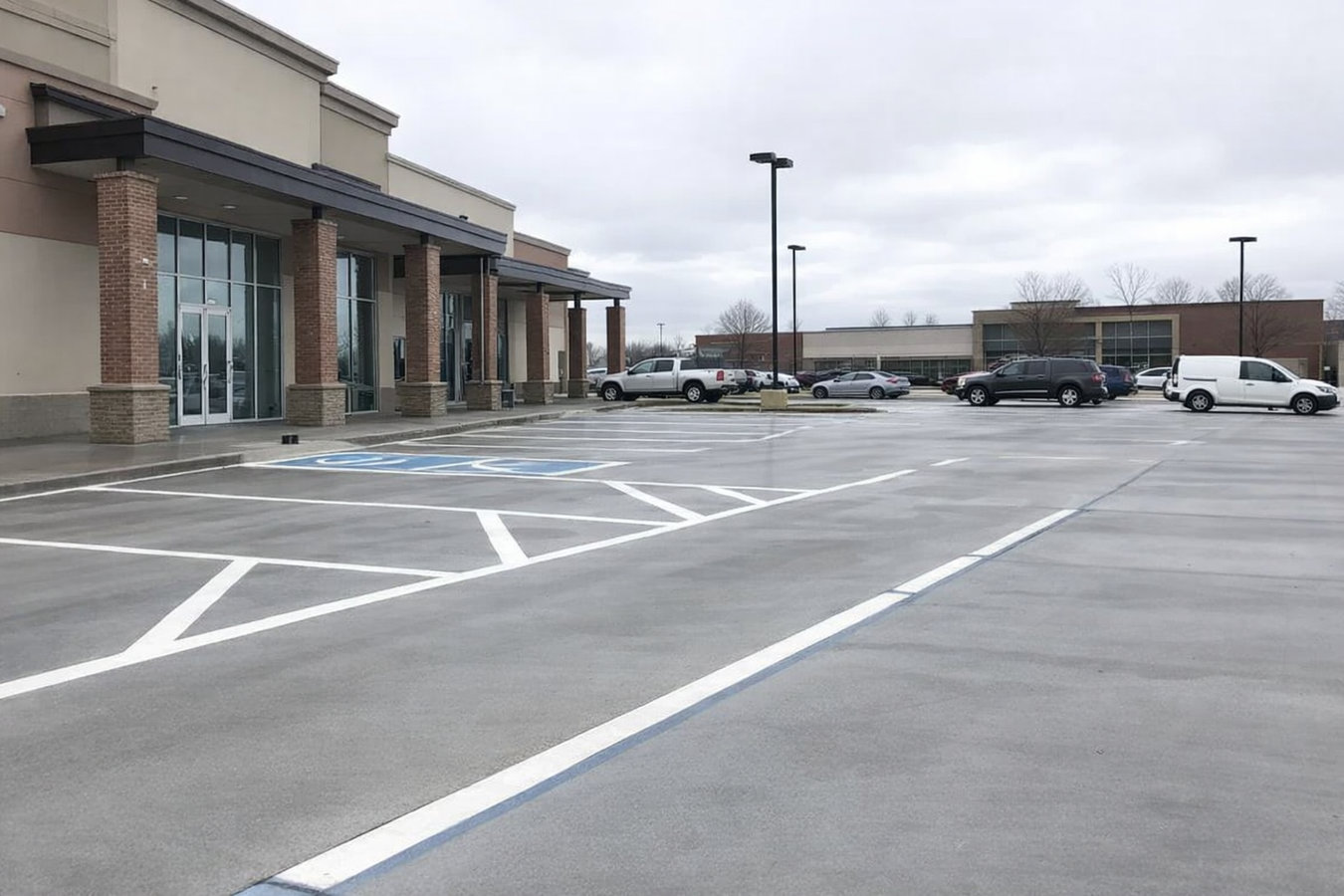
Crumbling asphalt, poor drainage, and constant repairs add up fast. A properly built concrete lot holds up to coastal conditions, handles hillside runoff, and cuts your maintenance costs for decades.
Concrete parking lot building in San Clemente means removing the existing surface, grading the ground for proper drainage, laying a compacted base, and pouring a reinforced slab - most residential lots take two to five days of active work, plus seven days of curing before vehicles can use it.
If your current surface has cracks that keep coming back, water pooling after rain, or sections that are actively crumbling, you are past the point where patching makes sense. San Clemente's hillside lots and coastal soil conditions mean drainage and base preparation are not optional extras - they determine whether the lot lasts five years or forty. Getting the subgrade right is what separates a lot that holds up from one that keeps costing you money.
If the lot connects to an existing footing system or a structure with its own foundation, we coordinate that work together. And if you also need a connecting concrete driveway approach, we plan both projects as one so transitions and drainage align properly.
If you have patched the same cracks two or three times and they keep reopening, the surface itself is no longer the problem. The base beneath it has shifted or settled, and patching the top will not fix what is happening below. In San Clemente, hillside soil movement and expansive clay that swells with seasonal rain are common causes of this pattern. At that point, a full replacement is almost always more cost-effective than continued repairs.
San Clemente gets most of its rain between November and March, and if you notice standing water in the same spots after each storm, the surface drainage has failed. Poor drainage accelerates surface breakdown and can send water toward a building foundation. This is a sign the lot's slope and drainage design need to be rebuilt from the ground up - not just patched.
Small surface pits are cosmetic. But when large areas are flaking apart, crumbling at the edges, or breaking up underfoot, the structural integrity of the surface is gone. Vehicles can damage tires and undercarriages on deteriorated lots, and the breakdown will only spread. Salt air from the Pacific accelerates this process on unprotected or uncoated surfaces near the coast.
If you are building an ADU, expanding a business footprint, or converting a yard area to usable parking, starting with concrete makes more sense than defaulting to asphalt. San Clemente's permit process requires a proper drainage plan regardless of surface material, so the planning work is the same either way - and concrete delivers a much longer return on that investment.
Every parking lot we build starts with the base, not the surface. We demolish and remove whatever is there, compact the subgrade, and install the gravel base layer that determines long-term performance. Concrete slabs are reinforced with rebar or wire mesh, poured to the correct thickness for your vehicle load - typically four inches for passenger cars and six inches or more for heavier vehicles - and given control joints cut at regular intervals so any cracking happens in controlled, invisible lines rather than random fractures across the surface.
We apply a coastal-rated sealer after the lot cures, which is especially important near San Clemente's shoreline where salt air accelerates surface wear. For lots that connect to a structure, we coordinate with any existing footing work to keep drainage and transitions clean. If you need a connecting entry or exit apron that flows into a concrete driveway, we plan both together so the grade and edge details work as one.
Best for residential and commercial properties that need durable parking with a clean, low-maintenance surface.
Suited for lots that handle delivery vehicles, RVs, or commercial equipment requiring six-inch-plus thickness.
Ideal when the existing surface and base are beyond repair and a fresh start is the most cost-effective path.
Right for properties adding parking from scratch - ADUs, business expansions, or converted yard areas.
San Clemente is built on hillsides above the Pacific, and a large share of residential and small commercial properties sit on grades that create real drainage challenges. Water has to go somewhere, and if a lot is not graded with your specific slope and drainage pattern in mind, it ends up moving toward your building foundation or a neighbor's property. The city's permit process for parking lot construction - handled through San Clemente Development Services - specifically reviews drainage before approving any new lot. That review is a protection worth having. Beyond drainage, parts of San Clemente and the surrounding South Orange County area have expansive clay soils that swell when wet and shrink when dry - a repeated movement cycle that pushes and pulls at a concrete slab from below and requires the right base preparation and slab thickness to manage.
Salt air off the Pacific adds another layer that inland contractors often underestimate. An unprotected concrete surface within a few miles of the coast will show wear faster than it would in an inland city - the salt works into surface pores and, over time, breaks down the material from the inside. A coastal-rated sealer applied after curing is a small step with a meaningful impact on how long the lot stays in good shape. We serve properties across San Clemente, from the older neighborhoods near downtown to newer developments, and also work regularly in nearby Dana Point and San Juan Capistrano, where similar coastal soil and drainage conditions apply.
We will follow up within one business day. We ask a few basics - approximate lot size, what is there now, and what vehicles it needs to handle - so we can come to the site prepared. Most concrete parking lot projects require an on-site visit before a firm price is possible.
We come to your property, check the slope and drainage, and assess the existing surface and soil. You get a written estimate that breaks down demolition, base prep, concrete, and any permit fees - no surprises when the invoice arrives.
We handle the permit application with San Clemente's Development Services on your behalf. For straightforward residential projects, budget one to three weeks for city approval. Work does not begin until the permit is in hand.
Once approved, the crew removes the old surface, grades and compacts the base, pours the reinforced slab, and cuts control joints. Plan to keep vehicles off the lot for at least seven days after the pour. We do a final walkthrough with you and apply the sealer once the concrete is fully cured.
We handle permits, drainage, and coastal sealing - so you get a lot that lasts and passes city inspection without any back-and-forth on your end.
(949) 739-0478We handle the San Clemente Development Services permit application, track the approval, and do not start work until the permit is in hand. You never have to navigate city paperwork yourself, and the finished lot has a full inspection record.
We calculate the slope and drainage path for your specific property before a shovel hits the ground. San Clemente's hillside terrain means drainage is not a detail you add at the end - it is the first design decision, and getting it right protects your building foundation and your neighbor's property.
Every lot we pour in the San Clemente area gets a sealer rated for salt-air exposure applied after full curing. The American Concrete Pavement Association notes that surface sealers in coastal environments significantly extend pavement life - a step some contractors skip to save time.
California requires every concrete contractor to hold a current license from the{' '}Contractors State License Board. You can verify our license on the CSLB website before you sign anything - we welcome the check. Licensed contractors carry required insurance, protecting you if anything unexpected happens on your property.
A properly built concrete lot in San Clemente's mild climate can last 25 to 40 years with minimal attention. We build every project as if we expect to drive on it ourselves in thirty years.
For information on concrete pavement standards, visit the American Concrete Pavement Association. For permit requirements, see the City of San Clemente Development Services.
If your lot connects to a structure, proper footings underneath anchor everything and keep the slab from shifting.
Learn morePair your parking lot with a matching concrete driveway so the approach and surface are one continuous, well-drained system.
Learn morePermit season fills up and project calendars move fast - reach out today to lock in your estimate and get on the schedule before the next wave of spring projects.