
Loading…
Serving San Clemente, CA and surrounding areas. (949) 739-0478
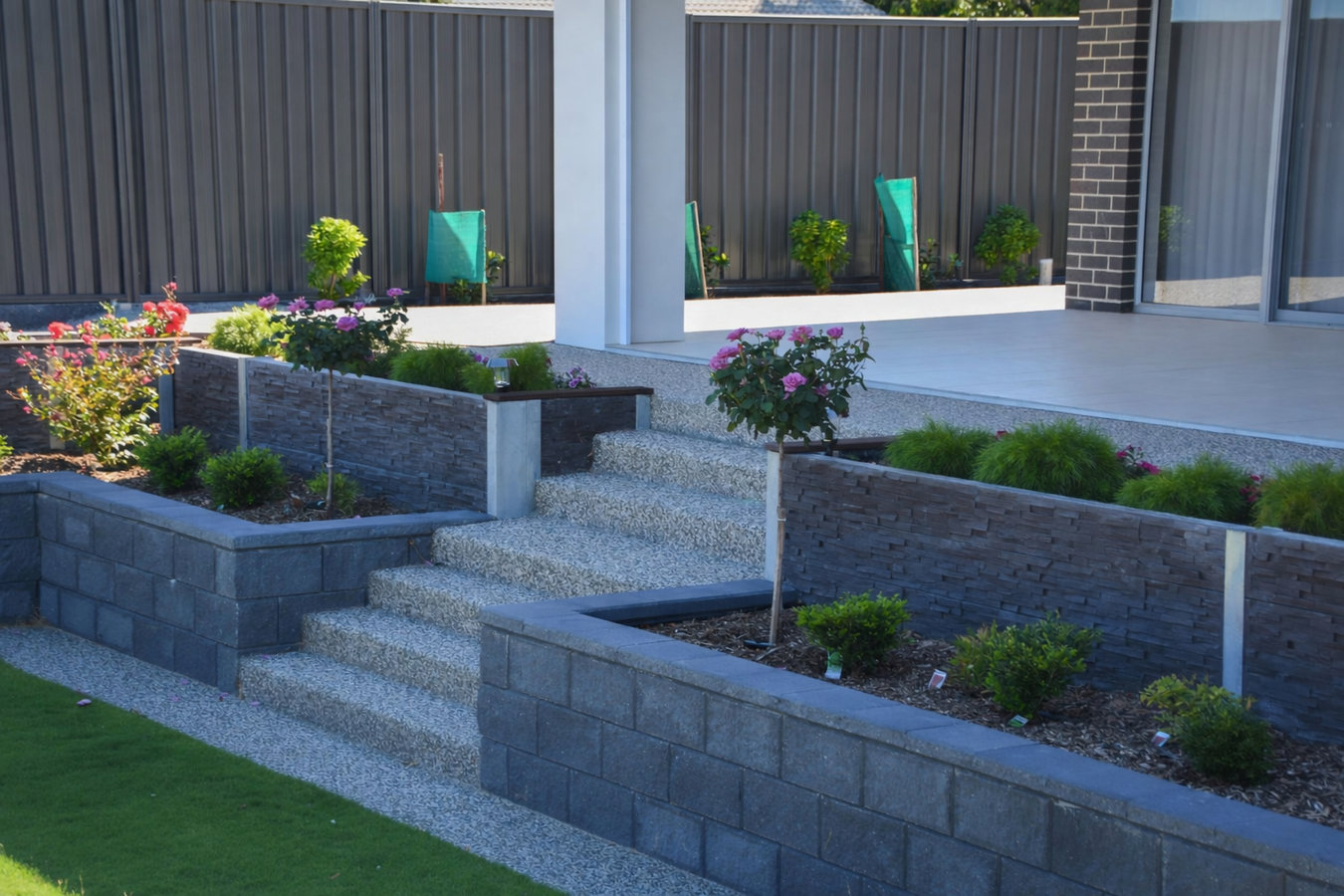
Hillside soil washing away or pushing toward your foundation? A properly built concrete retaining wall with drainage holds your yard stable through every rainy season.
Concrete retaining wall installation in San Clemente means excavating the base, forming and pouring a steel-reinforced concrete wall with gravel drainage backfill, and curing it fully before placing soil pressure against it - most residential projects take two to five days of active construction, plus one to three weeks upfront for city permits when required.
San Clemente is built on a series of coastal bluffs and canyons, which means a large share of homes sit on sloped lots where soil retention is a structural necessity. If your slope is washing after rain, or if an existing wall is leaning, the problem compounds with each wet season. A properly designed wall stops that cycle permanently.
Retaining walls often pair with other concrete work. If you are leveling a slope for a patio or parking area, our concrete floor installation service handles the flat slab. And if the project calls for deeper structural support below the wall base, our concrete footings service can be coordinated as part of the same build.
If you see dirt, gravel, or mulch collecting at the bottom of a slope after it rains - or bare soil where ground cover used to be - your hillside is eroding. San Clemente's wet winters can accelerate this quickly, and what starts as a cosmetic problem becomes a structural one within a season or two.
A retaining wall that is tilting forward, or one with horizontal cracks across its face, is under more pressure than it can handle. This is especially common on older San Clemente hillside properties built before current engineering standards. A leaning wall can fail suddenly - do not wait to have it assessed.
When there is no wall to hold back a slope, water follows the path of least resistance - often straight toward your home. Standing water near your foundation after a storm, or a yard that stays soggy long after the rain stops, often traces back to an unretained slope directing runoff the wrong way.
If you want to add flat, usable outdoor space to a hillside yard - a patio, parking pad, or garden terrace - you will almost certainly need a retaining wall to create and hold that level area. This is one of the most common reasons San Clemente homeowners build new walls during renovations.
Every retaining wall we build starts with a proper base excavation and footing - the foundation that determines whether the wall stays plumb for decades or starts shifting within a few years. We pour cast-in-place concrete walls with steel reinforcement throughout, which gives the structure the tensile strength to resist lateral soil pressure season after season. Drainage is built into every project: a gravel layer and perforated pipe sit behind the wall to channel water out before pressure can build.
Wall height and lot conditions shape how each project is sized. Walls up to 3 feet are relatively straightforward; walls reaching 4 feet or higher are designed with engineering input to handle the additional soil load safely. We connect retaining wall builds with adjacent work - including concrete floor installation for the leveled surface behind the wall and concrete footings when the project calls for deeper structural anchoring. We handle city permit applications so you are not navigating that process on your own.
Best for homeowners on sloped lots who need to hold back soil, create a level yard area, or protect a foundation from hillside runoff.
Suits homeowners whose existing wall is leaning, cracked, or was built without adequate drainage and is now failing under soil pressure.
Ideal for hillside properties that need multiple stepped walls to break a steep grade into manageable, usable terraces.
For homeowners in HOA communities or those who want the wall face to complement their home's exterior with a smooth, colored, or textured surface.
San Clemente is built on coastal bluffs, canyons, and hillside terraces, which means a large share of homes sit on sloped lots where soil retention is not optional. Much of the soil here is sandy, clay-heavy, or decomposed granite - materials that shift more than stable bedrock, especially after wet winters. Salt air from the Pacific adds a further challenge: any steel reinforcement inside the wall can corrode faster near the coast if the concrete is not mixed and placed correctly for a marine environment. We use the right concrete mix and reinforcement coverage for San Clemente's coastal conditions - not a formula designed for a dry inland climate.
Permit and HOA requirements are another layer specific to this city. The City of San Clemente requires permits for walls over 4 feet, and neighborhoods throughout San Clemente - including master-planned communities - have HOA rules about wall height, finish materials, and design review. We also serve homeowners in nearby Dana Point where similar hillside and coastal conditions apply. We handle the permit application and can walk you through HOA requirements before the first shovel goes in.
We reply within one business day and schedule a no-charge site visit. We assess your slope, soil conditions, drainage situation, and any nearby structures that affect how the wall needs to be designed - all before quoting you a number.
After the visit you receive a written estimate covering labor, materials, drainage, and permit fees. We submit the permit application to the City of San Clemente before any work begins - typical approval takes one to three weeks.
The crew digs out the wall base, removes loose soil, and prepares a solid footing for the concrete. This is the noisiest phase - expect limited yard access for one to two days. Neighbors near a shared property line should be given a heads-up before work starts.
Forms go up, steel reinforcement is set, and concrete is poured. The drainage layer - gravel and perforated pipe - is installed behind the wall before backfilling. A city inspector signs off before the permit closes, confirming the work meets San Clemente's building requirements.
We handle the permit, the drainage design, and the coastal concrete mix. Free on-site estimate - no obligation.
(949) 739-0478We install a gravel layer and perforated drainage pipe behind every retaining wall - not as an add-on, but as a standard part of the project. In San Clemente's wet winters, a wall without drainage is a wall that will eventually fail. We build them right the first time.
We pull every required city permit before breaking ground, and a San Clemente building inspector reviews the wall before the job is closed out. That documentation stays with your property record and protects you at the time of sale.
Salt air off the Pacific accelerates corrosion in steel reinforcement if the concrete covering it is not specified for a marine environment. We use a mix and reinforcement coverage designed for coastal Southern California - not a formula built for drier inland climates.
Local presence means we know San Clemente's permit office, common HOA requirements in communities like Talega and Sea Summit, and the hillside soil conditions that shape every wall project. You can verify any California contractor's license through the California Contractors State License Board.
Drainage, permits, coastal mix design, and local knowledge each play a direct role in whether your retaining wall is still standing straight in 20 years. That is the standard we hold every project to. See the American Concrete Institute retaining wall guidelines for the industry standards that guide how these structures are built and inspected.
Once a retaining wall creates level ground on your hillside lot, a poured concrete floor turns that cleared space into a patio, parking surface, or utility area.
Learn moreSteep or unstable San Clemente lots sometimes need deep concrete footings below the wall base to safely anchor the structure against lateral soil pressure.
Learn moreSan Clemente's rainy season can accelerate hillside erosion quickly - the sooner your slope is stabilized, the less damage compounds from one storm to the next.